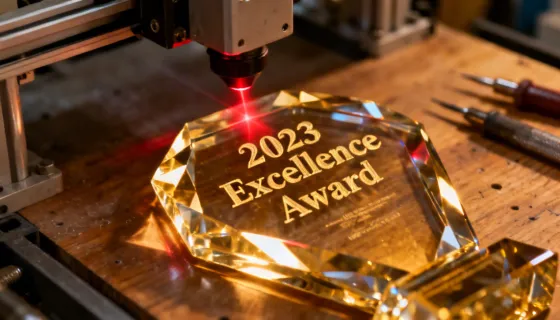
Awards & Recognition
Crystal, glass, and acrylic awards with photographic-quality engraving detail. Our CO2 laser systems produce crisp text down to 2-point font sizes and reproduce photographic images with smooth grayscale gradients. Typical throughput for a standard 8x10 inch plaque: 3-5 minutes depending on detail complexity.
Common Materials
- Cast acrylic (3-25mm)
- Crystal and optical glass
- Hardwood (oak, walnut, cherry)
- Anodized aluminum
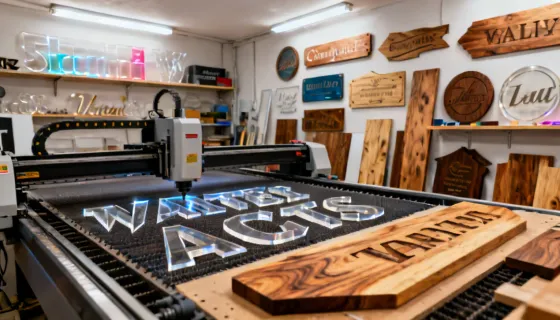
Signage & Visual Displays
Dimensional lettering, wayfinding signs, and branded displays from acrylic, wood, and composite materials. Laser cutting produces flame-polished edges on acrylic that require no post-processing. Interior and exterior signage for retail, corporate, and hospitality environments.
Common Materials
- Cast and extruded acrylic
- Wood and MDF
- Laminated plastics
- Rubber stamp material
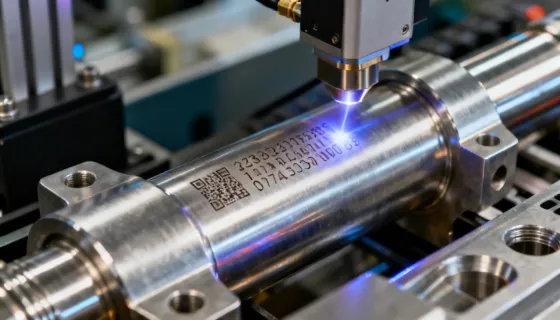
Industrial Part Marking & Traceability
Permanent identification marks on metal components for serial tracking, regulatory compliance, and supply chain traceability. Our FiberMark systems produce high-contrast marks on stainless steel, titanium, and aluminum that withstand chemical cleaning, heat treatment, and mechanical wear.
Common Materials
- Stainless steel (304, 316)
- Titanium and titanium alloys
- Aluminum and anodized aluminum
- Tool steel and carbide
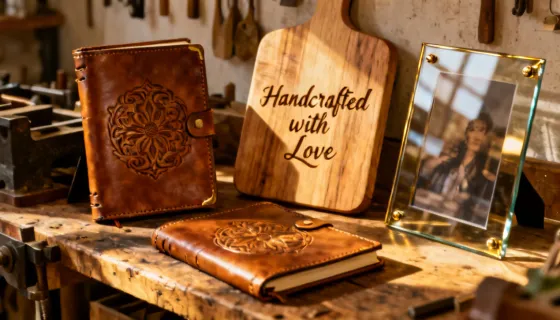
Personalization & Custom Products
Turn standard products into one-of-a-kind items with names, dates, logos, and custom artwork. The personalization market continues to grow, with Grand View Research estimating the global personalized gifts market at a 7.9% CAGR through 2030, creating ongoing revenue opportunities for businesses with laser engraving capability.
Common Materials
- Leather goods and accessories
- Wooden kitchenware and decor
- Glass drinkware
- Fabric and textiles
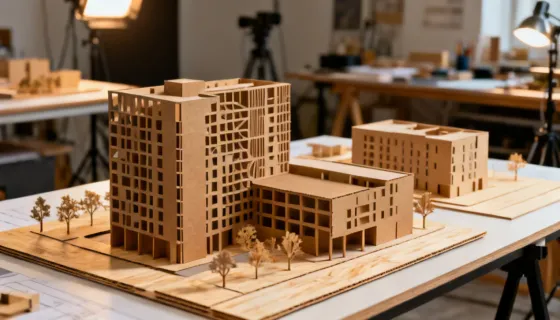
Architecture & Model Making
Precision scale models and prototypes from paper, cardboard, balsa wood, and acrylic. Laser cutting produces repeatable results for iterative design processes. Schools of architecture and professional firms use Epilog systems for presentation models, structural studies, and competition entries.
Common Materials
- Museum board and mat board
- Balsa and basswood sheets
- Thin acrylic (1-3mm)
- Corrugated cardboard
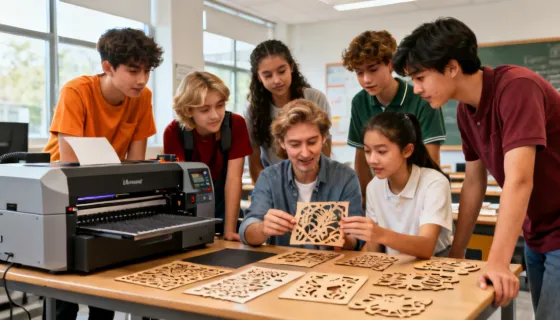
Education & STEM Programs
Desktop laser engravers are increasingly standard equipment in makerspaces, fab labs, and STEM programs at secondary and post-secondary institutions. Students learn design-to-fabrication workflows using the same software tools (CorelDRAW, Illustrator, Fusion 360) used in professional settings.
Common Materials
- Plywood and MDF
- Cast acrylic
- Cardstock and paper
- Leather and felt